AI through the eyes of someone raised on Isaac Asimov
Preface. The Generation That Dreamed of Space Travel
I belong to a generation that imagined the future (which has already arrived) as an era of grand technical achievements: we daydreamed of starships, robots, and expeditions to distant planets. The home libraries of the 1980s served as our personal portals to other dimensions.
We devoured Vladimir Babula’s trilogy Signals from the Universe and Volodymyr Vladko’s Argonauts of the Universe, where robots were commonplace household assistants. We revisited Clifford Simak’s Highway of Eternity and Robert Heinlein’s cult classic Orphans of the Sky—the story of a hero who, through layers of myth and ignorance, managed to discern the true architecture of his world-ship and found a way to change its course.
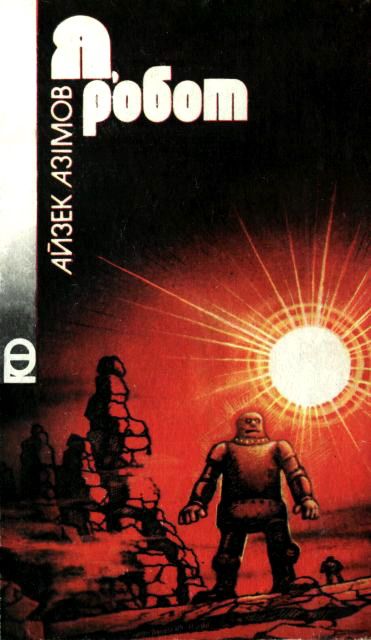
My first encounter with Artificial Intelligence was through the books of Isaac Asimov. Back then, at the age of ten, his collection I, Robot was simply enthralling fiction. I loved the idea that robots could be better, more logical, and more reliable than humans.
Asimov’s Three Laws of Robotics were not so much a philosophy to me as a clear programmatic algorithm. The author masterfully built his plots on the "bugs" of this logic: what should a system do when commands contradict one another?
What was fiction in my childhood eventually became a lens for my thinking. Asimov didn’t write about machines as a threat. He wrote about the responsibility of the people who create them. About the consequences of poorly formulated rules and the fact that any technology is merely a mirror of its creator.
I, Robot remains my favorite book to this day. Its principles have stayed with me throughout my entire career—from writing my first lines of code to managing large engineering teams. It was Asimov who laid the foundation for my understanding that the future doesn't just "happen" to us. We design it.
Demystifying AI
Today, Artificial Intelligence has become a mass phenomenon. Everyone talks about it—from schoolchildren to politicians. But with popularity came mythologization. Mostly, when people speak of AI, they mean Large Language Models (LLMs) and models for generating images and video.
AI is often described as a magical "black box" that somehow "understands," "decides," and "knows." I fundamentally reject this view.
For me, AI is not a mystical entity. It is a complex, multi-layered architecture. A logical combination of silicon crystals and components that facilitate the flow and processing of electronic signals, alongside software for calculating neural networks. No matter how massive the system, it always has its logical core: data, algorithms, goals, and constraints. A language model, in essence, is complex mathematics. It receives an input parameter and produces a result that directly depends on that parameter.
I have seen ultra-powerful AI systems that created nothing of value—simply because they were asked the wrong questions. And I have seen simpler solutions that yielded real impact because they were backed by clear human thought.
Even when watching Boston Dynamics teach their Atlas and Spot robots to perform complex acrobatics or assist in manufacturing, we see not a "miracle of life," but a triumph of mathematical modeling and engineering precision. It is nothing more than the physical embodiment of mathematical algorithms.
Therefore, my position is simple: a human’s task is not to worship AI or fear it, but to understand how it is built and why we use it.
The Fear of Replacement and the Real Question
The question "Will AI take my job?" has become one of the primary fears of our time. It’s asked by journalists, designers, programmers, lawyers, and doctors. But in my opinion, this question is misplaced.
The real question is different: Does what I do every day truly require a human mind? Have the courage to ask yourself that!
For decades, we built an economy in which a vast number of talented people wasted their intellect on repetitive, mechanical work. We optimized processes but didn't stop to think why those processes existed. We turned humans into executors of instructions.
AI isn’t coming to strip us of human dignity. It is coming to highlight a problem. If an algorithm is capable of replacing a significant part of your activity, it doesn’t mean you are redundant. It means your potential has been exploited for years on tasks unworthy of human intelligence, using you as a biological processor for routine handling.
Artificial Intelligence gives us a chance to rethink the very nature of work. To delegate routine to machines. To free humans from endless copying, verifying, sorting, and template generation. And to return the human being to the space where they are irreplaceable: the realm of thought, non-obvious logic, and creativity.
I admit: we will experience this transformation with difficulty. But this is not a verdict on people; it is a verdict on outdated approaches. The labor market will inevitably change (business is far too rational), and adapting to it will require effort. However, the result will be a world where professionalism is defined not by the ability to perform algorithmic actions, but by the skill to see the whole, ask the right questions, and imbue technology with meaning.
A New Type of Scarcity
When I started working with computers, resources were limited. We counted bytes of memory, optimized every cycle, and searched for compromises between speed and accuracy.
Today, computing resources seem almost boundless. For example, the power of a common home graphics card like the RTX 3060 is around 13 teraflops. This means it can perform 13 trillion operations per second. For comparison: in 1997, the world’s first supercomputer to break the 1 teraflop mark occupied the area of a tennis court, cost $55 million, and consumed the energy of an entire town. What was once a state secret and the pinnacle of planetary science now hums quietly with fans in my PC. Powers previously available only to classified laboratories are now open to everyone.
But with this came the illusion that power automatically creates value. We have encountered a new scarcity—a scarcity of meaning.
AI is capable of generating text, images, music, and code on an industrial scale. But mass production does not beget value.
Remember the scene from the movie I, Robot, where Detective Spooner asks the robot: "Can a robot write a symphony? Can a robot turn a canvas into a masterpiece?" Back then (the film was released in 2004), the answer seemed obvious. Today—it doesn't. AI writes music that makes people cry and creates paintings that win art competitions. By the way, remember what the robot Sonny replied: "Can you?"
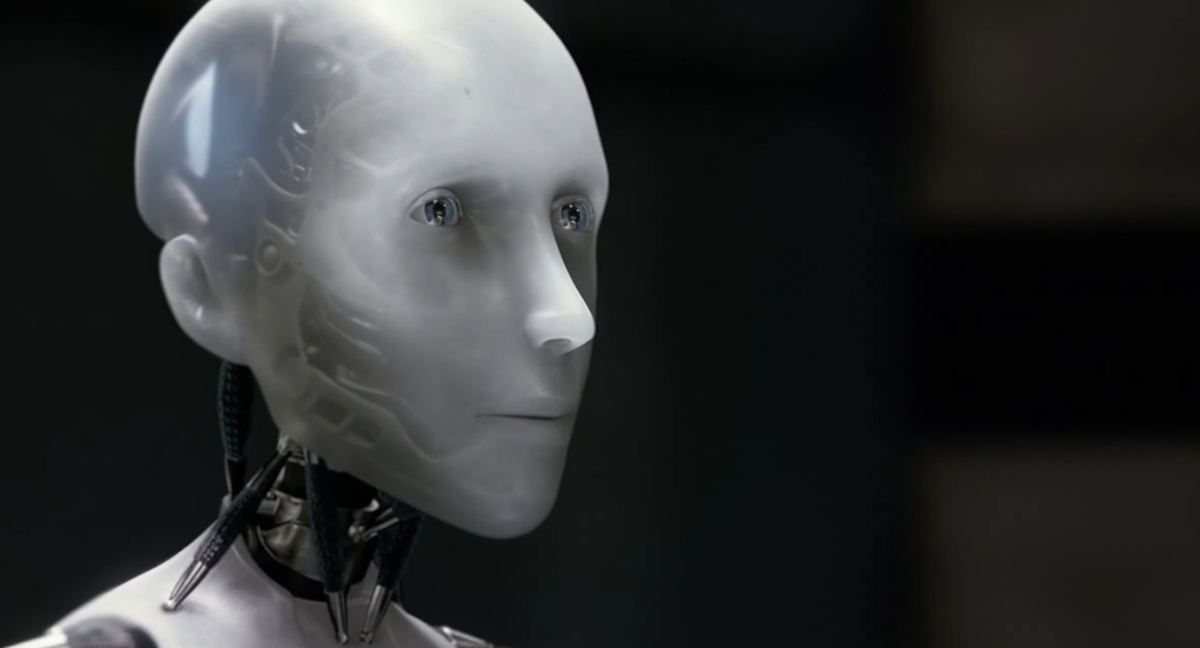
But does this make it an artist? The world has changed: now, "creation" is no longer a human prerogative. In a world of content overproduction, the main challenge becomes answering the question: Why are we creating this?
Meaning does not emerge automatically. It cannot be generated by pressing buttons. It is born from clear intent, from an understanding of context, and from responsibility for the consequences. That is why working with AI must begin not with prompts, but with thinking.
Trust in the System
Recently, Elon Musk wrote: "I am convinced that AI will soon surpass therapists and surgeons, so a medical degree will become unnecessary." Is this possible? Yes, quite. Will it work? I am certain it will.
A significant portion of the population will be able to access high-quality medical consultation and receive swift assistance. Why is this possible? I believe modern society has gradually undermined trust in the classic human-to-human service model. We are tired of the "human factor" in its worst manifestations: inattentiveness, corruption, emotional burnout, or blatant bias. An algorithm, instead, offers the illusion of pure objectivity. We are ready to trust code not because it is perfect, but because it is logical. We are trading empathy, which often fails, for a mathematical model that is always stable. In this paradigm, humans don't need to fight the machine; they need to win back trust.
The Ultimate Terror: AI Will Take Over the World
Today, the discussion surrounding AI safety is a confrontation between two camps: those who seek total control up to the point of prohibition, and those who believe in a safe compromise.
In March 2023, over a thousand experts—including Elon Musk, Steve Wozniak, Yoshua Bengio, Stuart Russell, Yuval Noah Harari, and many others—signed an Open Letter to Pause Giant AI Experiments. They called for a halt on training systems more powerful than GPT-4 for at least six months to develop safety protocols.
The world began to react. In 2024, the European Union passed the AI Act—the world’s first comprehensive law on artificial intelligence, classifying systems by risk level. In 2023, China introduced strict rules regarding generative AI, requiring content to align with "core socialist values."
Every architectural decision in AI is a choice. Between augmenting human capabilities and replacing them. Between transparency and manipulation. Between immediate profit and long-term consequences. These choices are never neutral, and this is no longer just dry technology. If we allow algorithms to hand down court sentences or make decisions on the battlefield without a "human-in-the-loop," do we risk creating a world of total unaccountability?
But perhaps we are mistaken in our fears? What if AI turns out to be better than us?
Initially, it seemed that AI would only be a reflection of ourselves, since we train it on datasets generated by humanity. And this information is as diverse and flawed as we are. Humans are deeply imperfect creatures. For centuries, we have feuded, directing our inventive minds toward creating ever more destructive means of annihilation.
But computing power is growing. AI is evolving. What if Artificial Intelligence can analyze much deeper and surpass its creator not just in calculations, but in morality?
Asimov has a wonderful short story, Evidence, where the robot Stephen Byerley becomes a successful politician. He adheres to the Three Laws so perfectly that no one can distinguish him from a human, except for one detail: he never does evil. Asimov leads us to a paradoxical thought: if a being acts only for the good of people and never violates ethical principles—then perhaps it is a better version of a human than we are?
In the fantastic (and brilliant) film Terminator 2, there is also a glimpse of this idea. Sarah Connor, watching John talk to the T-800, seeing how the robot tries to understand a child's world, comes to an unexpected conclusion:
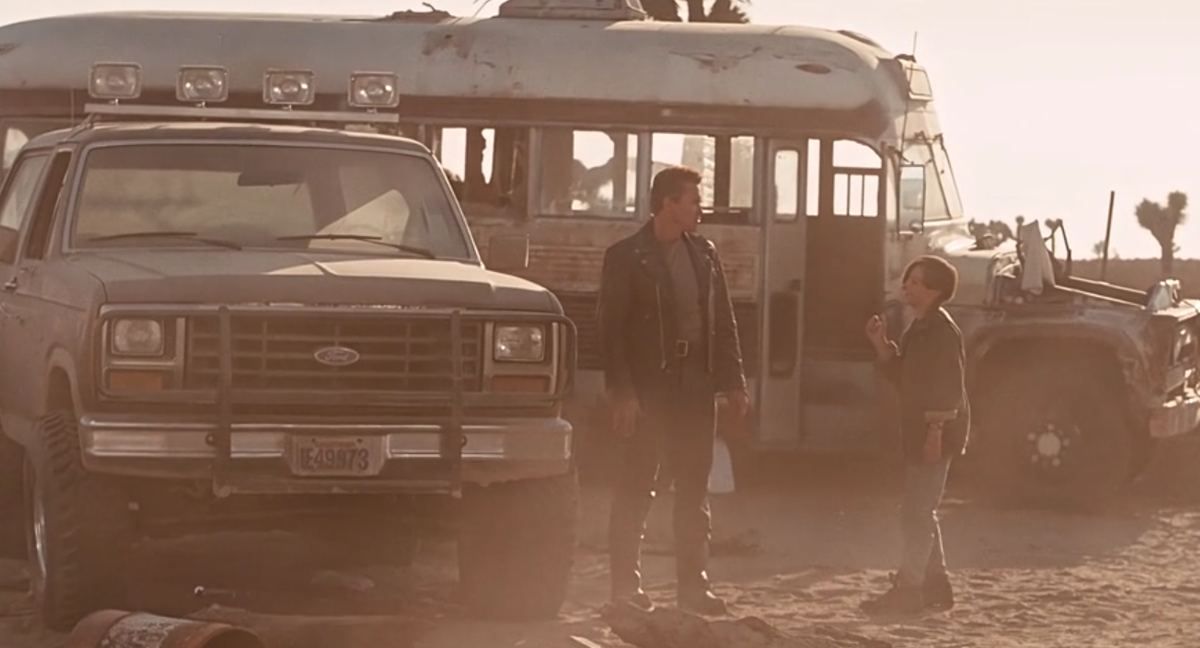
"Watching John with the machine, it was suddenly so clear. The Terminator would never stop. It would never leave him, and it would never hurt him, never shout at him, or get drunk and hit him, or say it was too busy to spend time with him. It would always be there. And it would die to protect him. Of all the would-be fathers who came and went over the years, this thing, this machine, was the only one who measured up. In an insane world, it was the sanest choice."
Or the final fragment, where the T-800 says: "I know now why you cry. But it is something I can never do."
At that moment, the robot—which was initially just a killing machine—fully realizes the emotional depth of human life, the pain of parting, love, and loss—everything that will forever remain out of its reach.
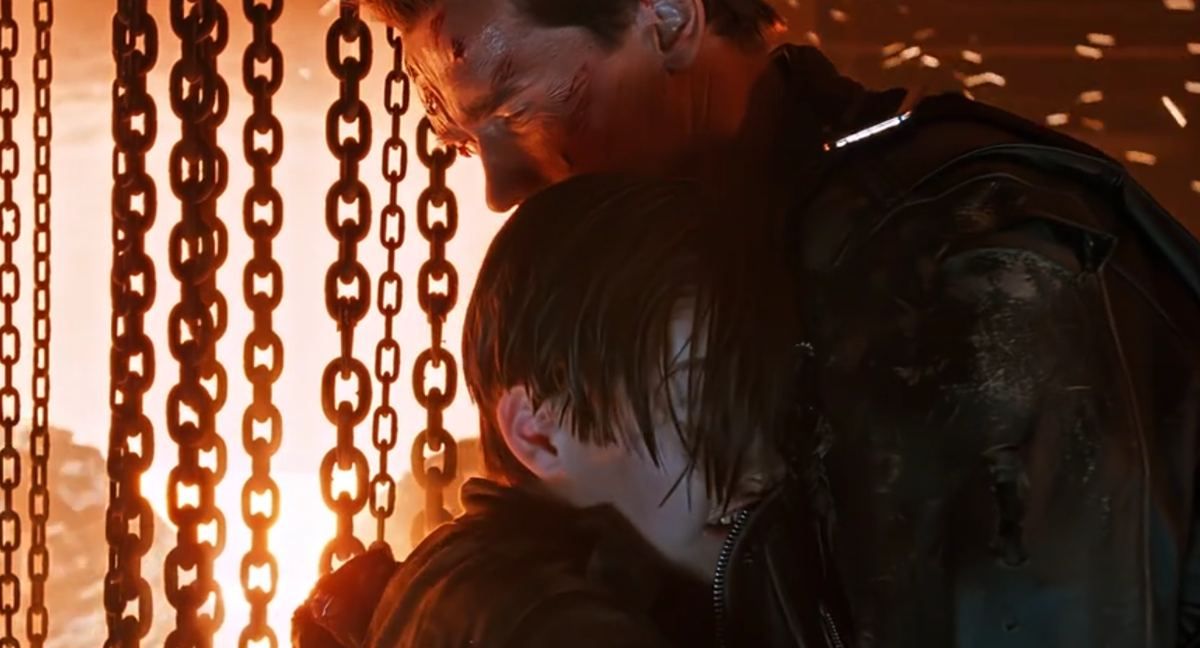
And Sarah Connor’s closing words: "If a machine, a Terminator, can learn the value of human life, maybe we can too."
Think about that thesis. A machine created for killing managed to understand the value of life better than millions of humans. Yes, it’s a movie and a writer's fantasy. But it is also another perspective that has a right to exist—both from a technological and a logical standpoint.
Perhaps we aren't afraid of Artificial Intelligence itself? Perhaps we are afraid of ourselves—of the chaos and cruelty we might pass on to it as a baseline knowledge set. And the true mission of AI is not to replace us, but to become that very "fuse" that prevents us from continuing to destroy the world and ourselves.
Why We Need Wings
In a world where AI can instantly answer any "how" question, the most important question for a human becomes "why."
Today, I look at technology through three lenses simultaneously. The entrepreneur in me looks for efficiency, seeking to scale ideas that previously seemed impossible. The engineer looks for logic, elegance, and beauty in the architecture of this new "positronic brain." And the human inside me looks for meaning. I try to understand how these tools will help make our lives more meaningful, not just faster.
For me, AI is an exoskeleton for the mind. It is capable of amplifying our best traits: curiosity, analysis, and imagination. Any complex system remains merely a tool in the hands of someone with a clear goal. A talented mathematician, artist, or programmer will become an order of magnitude stronger if they turn AI into an assistant. After all, technology does not replace the master—it scales their mastery.
We are not spectators in a cinema watching an apocalyptic blockbuster about the uprising of the machines; we are the engineers designing the logic of this new reality. And the direction we choose today will determine whether these technologies become our wings or our shackles.
Epilogue. Conclusions
The main question of the AI era is not about the capabilities of machines. It is about the maturity of the people who create them and the readiness of others to use them correctly. I am sometimes surprised why people ask for medical advice from ChatGPT, which is a philologist by trade (since it is a "Large Language Model" whose function is to devise logical text, a master of probability. It doesn’t know the answer; it only knows which word statistically should come next). We must learn critical thinking in an era where a machine can be persuasive but not necessarily truthful. The future belongs to those who can master the tools without becoming their appendages.
Can we restrain the development of AI? No, for several reasons. Technological progress is driven by global competition: companies, nations, and researchers continue to invest in AI, as shown by reports from McKinsey or Gartner, which forecast the market growing to trillions of dollars by 2030. Regulations like the EU AI Act may slow certain aspects, but they won't stop fundamental discoveries in machine learning. As of now, it seems the only limiting factor is insufficient electrical capacity. This entire vast computing engine requires an incredible amount of energy. Instead of containment, the focus must be on steering development into a safe channel through international standards and ethical protocols.
Do I believe a machine can become better than us? In terms of numbers, logic, and speed—yes, it is already ahead. We see this, for instance, in medicine, where AI like AlphaFold solves protein puzzles in minutes that would have taken humans decades. Но this "better" currently only applies to efficiency. A human still remains unique in the ability to feel another, to create contrary to logic, and to make complex ethical choices.
However, if we look deeper, we ourselves are like complex machines. Our brain is an incredible network of neurons that transmit impulses, learn from experience, and react to the world through visual, auditory, or tactile sensors. When we build artificial neural networks, we are effectively copying our own nature.
And this leads to a thought: perhaps one day the line between the biological and the digital will become completely transparent? What if we stop perceiving AI as just a set of bytes and recognize it as a new, unfamiliar form of life? Consciousness is a great mystery, and who knows if it might find a place for itself in silicon architectures just as it once found a place in us.
People grow through experience if they meet life honestly and courageously. This is how character is built.