Journey: From 8-Bit Systems to the Architecture of Meaning
The Prologue
My path into technology didn’t begin with writing code, flipping through illustrated books on software architecture, or mastering trendy frameworks. It began with the thin coil of smoke rising from a heated soldering iron, the sharp scent of rosin, and the first book on electronics my father ever gave me. That was a profound gift—an invitation into a world where you could build things with your own hands, explore them, break them, and make them better. It was my father who introduced me to the engineering mindset and set me on my way.
In that smoke drifting under the desk lamp—a scent I can still recall vividly today—there was a certain refined romance. For me, engineering has never been just a credential on a diploma. It is a way of seeing the world as a complex, logical system where every detail has a purpose and every node carries a story. Long before I touched a computer, I learned to solder circuits, grasp the principles of microelectronics, and understand how components and signals interact. It was a "tangible" experience: a project either worked or it didn’t. Errors were immediately visible, and burnt fingers taught responsibility better than any manual ever could.
Only later did computers enter the frame. I’ve lived through several technological epochs—from 8-bit systems to modern neural network inference platforms. It feels like a journey from the first spark of a cave fire to the controlled inferno of a rocket engine.
The Foundation: The Discipline of Constraints and Hardware Magic
My professional mindset was forged in an era when hardware resources were a luxury. Those who programmed for the ZX Spectrum know exactly what I mean. We counted every byte of memory and every CPU cycle. Today, it’s hard to imagine squeezing a fully functional program or game into 16 or 48 kilobytes. When memory is measured in bytes and performance in clock cycles, you instinctively learn to respect resources and seek elegant simplicity.
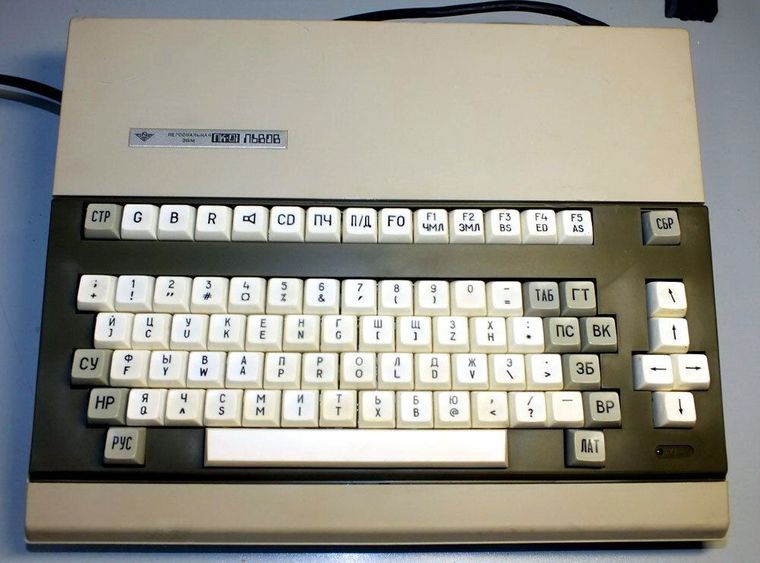
I wrote my first computer program as a schoolboy on December 1, 1991. For the most part, it was "imaginary programming": I wrote the algorithms and code for a "Lviv" PC on ordinary squared notebook paper. I only had a few hours of computer access per week at my father's workplace. I had to be my own interpreter—debugging code in my head, visualizing every execution step, "rendering" the output on paper, and anticipating errors just to ensure not a single minute at the keyboard was wasted. It was an unforgettable experience that taught me to see a system before it even begins to run.
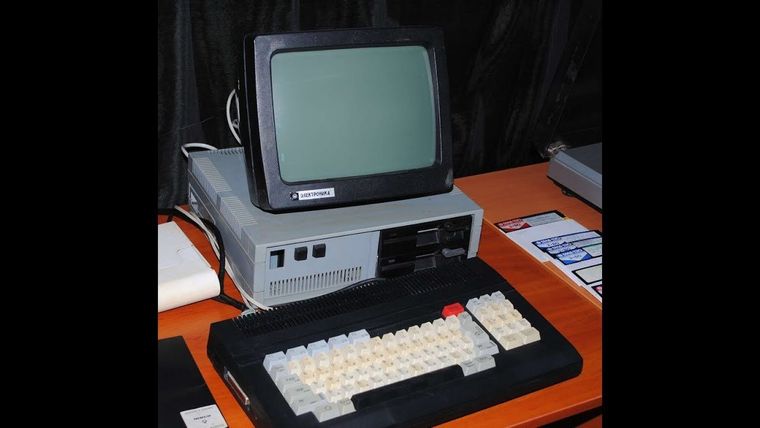
Another world entirely was the programming club at the Station of Young Technicians. In the 90s, that place felt magical: the characteristic screech of floppy disks, the smell of warm plastic from "Korvet" PCs, and the flickering characters on monochrome monitors. It was there that Svitlana Aleksyeeva taught us to create real software, translating algorithms from squared paper into living code. She saw us as future engineers and taught us to treat programming as an art form. Thanks to her patience and that unique atmosphere among fellow young explorers, I finally realized: I wanted to be a programmer.
Computers were expensive. Buying one wasn’t an option. That’s where my knowledge of microelectronics saved the day. I spent months building my first ZX Spectrum (an 8-bit personal computer) from scratch. It was a true quest—from studying documentation to hunting down microchips. When the last contact was soldered and the power was switched on... I saw a blank screen. Weeks followed with an oscilloscope, searching for shorted traces, checking signals, replacing chips... fighting the urge to give up on it all. Until finally, the screen flashed the cherished: “Copyright 1982 Sinclair Research Ltd.” Technology isn't magic; it’s the result of persistence, knowledge, and self-belief. It is a craft elevated to the level of art.
Evolution: From Engineering to Organizational Systems
However, the most complex system isn’t software code—it’s a human organization. People aren't bytes. You can’t just "allocate" them into slots. At my first company, Softac, which I co-founded with Yuriy Tsyutsyak and Serhiy Bantush, I had to be the CEO, salesman, trainer, coder, and sysadmin all at once. We wrote code until late at night, rushed to university lectures in the morning, and headed straight back to work.
Over time, I programmed less and spent more time on organizational tasks. My tenure at SoftServe, where I headed a development center for four years, was a purely managerial role—managing people and processes. Later, at bvblogic, a company we founded, I had to build technical infrastructure, recruitment, legal support, and many other technical and organizational systems from the ground up.
The main takeaway from that period: a true manager doesn't "rule"; they create the conditions for their team to succeed. Since then, I don’t look for "cogs" for a machine in my projects; I look for personalities with that "explorer’s spark."
In management, my background as a developer is invaluable. It helps when you understand exactly what your team is doing, the tech stack they rely on, and where the pitfalls lie. Moreover, I had to learn to balance an engineer’s passion for perfection with an entrepreneur’s pragmatism—choosing not just "the best way" to do something, but "the most viable way."
Scale: Digital Transformation of the State
My experience in the public sector was a step away from private business. It was an attempt to scale engineering thinking to the level of a region and a country. Could algorithmic logic defeat the inertia of bureaucracy? As the Chief Digital Transformation Officer (CDTO) of the Ivano-Frankivsk region, my goal was to make state and local services convenient and fast. The state is a service. Therefore, it should be like a well-written system library: invisible, reliable, and fast. When everything works, most users don't even know it exists. When a person receives a service in a few clicks instead of hours in queues—that is the victory of engineering over the absurd.
New Horizons: AI and the Future
Today, I work with AI, viewing it through the lens of classic science fiction. For me, it isn’t a threat, but Asimov’s "positronic brain" meant to assist humanity. I am reliving that childhood wonder of discovery once again. Out of habit, I started with the hardware. On my own server, I’ve already explored dozens of neural networks, technologies, and tools. To understand their logic, I program AI agents and train language models. In a world where AI can do everything and knows all the answers, what remains for us?
Today: Returning to the Roots
Despite everything, I remain an engineer at heart. Most of my hobbies involve creating mechanisms: designing CNC machines for milling circuit boards or building drawing robots. When the laser etches a design or the scent of fresh wood rises from under the mill, I am that same boy again, assembling his first computer. This is my meditation, my way of maintaining clarity of thought.
I believe in a future where technology makes us better. Where working with complex systems is simple. And where humans have the time to dream and create. After all, we don't build machines to replace us, but to give us wings to fly.