bvblogic:
How to Build the "Engine" of an IT Company
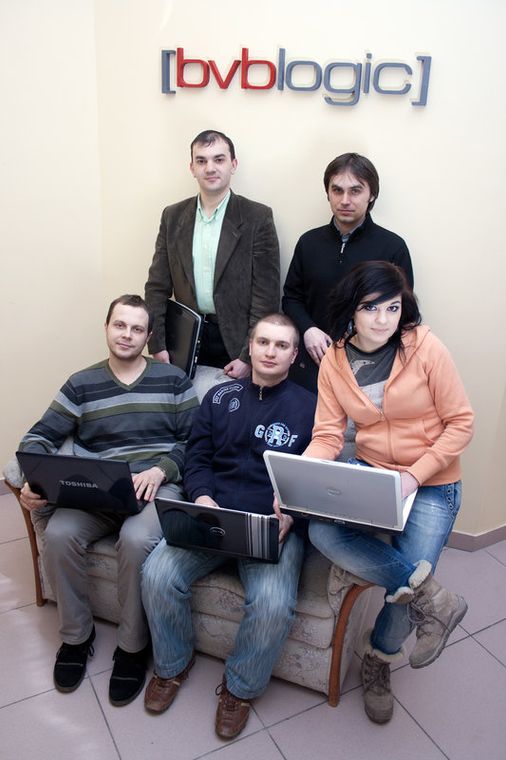
The company bvblogic was founded by three friends—Bohdan Futerko, Bohdan Tomenchuk, and Vitaliy Rodymiuk—on May 14, 2008 (the name itself incorporates the founders' initials). We were driven by pure passion and a love for what we did. However, as entrepreneurs, we understood that for the business to succeed, each of us had to focus on specific strategic goals. My partner took charge of the "outer perimeter"—sales, client relations, and entering new markets. I, as the COO, focused on everything happening "under the hood."
Attracting a client is only the first step. The next stage is building a reliable "engine" for the company—a system capable of delivering high-quality, predictable results even as the number of projects and team members grows rapidly. This is the story of how an engineering approach to management helped transform an ambitious startup into a stable technology company.
Talent Acquisition: Forming the Core of the Company
People became the vital component of our success. In the IT business, it is the team that defines the limits of your possibilities. During the active growth phase, we were constantly recruiting specialists, and I considered this one of my top priorities.
I conducted hundreds of interviews. It was simultaneously an assessment of skills and a search for like-minded people who shared our drive. I wanted to understand every candidate to ensure they wouldn't just "complete a task" but would strengthen the company with their expertise and energy.
But even more important was "building" a system where the best specialists would choose us. We focused on building our brand. We began sharing stories about how the company lives and works from the inside. We created unique advantages. Gradually, we shaped an image in the IT community of a company where people are valued, development opportunities are provided, and the work is genuinely interesting.
Technological Foundation: From the First Server to a Private Cloud
A growing IT business is a system whose stability relies, among other things, on "iron" (hardware) and telecommunications. My other task was to build the system so that technical limitations would never become a barrier to sales momentum.
We built the infrastructure from scratch. The first server in the corner of the room exhausted its resources faster than expected. Projects multiplied, and an attempt to solve the problem using VirtualBox virtualization failed very quickly. Simply buying more physical servers only partially relieved the tension but didn't provide the main thing—operational flexibility.
I looked for a technical solution to manage resources at a higher level. Our next virtualization system (based on Linux/Proxmox/LXC/KVM) became our foundation for years to come. This delivered exactly the result we sought: developers received stable testing environments, and the term "lag" disappeared from technical support requests.
In addition, we developed our own resource management and accounting system, transforming the infrastructure into a single, precisely managed mechanism. At a time when AWS was not yet the industry standard, we effectively implemented our own cloud architecture. This gave us a huge competitive advantage: when a partner brought a new contract, I didn't say, "We need a week to deploy." We were ready to start almost immediately.
ERP as the Company's Operating System
As the number of projects and staff grew rapidly, we faced the risk of losing control. Standard Excel spreadsheets or scattered task trackers no longer answered the question: "How effective are we really?" Buying off-the-shelf ERP solutions was expensive and inefficient—they didn't account for our specific processes. Therefore, I made a decision: we would develop our own business management ecosystem by integrating open-source and custom modules.
Project Tracker and Corporate Portal: The first tools for synchronizing efforts were a portal and a project tracker based on Redmine. We created a single digital ecosystem where everyone, from developer to manager, had full visibility of tasks and progress in real-time. This allowed us to consolidate critical information in one place and eliminate "operational noise."
Finances Under the Microscope: After a long and fruitless search for a ready-made financial accounting solution, I decided to program such a system myself. I developed the architecture and wrote the code, integrating it with the CRM and project tracker. We gained total control: information on income, expenses, and the actual profitability of each project became available in real-time. This was the moment of truth. We finally had the language of numbers instead of intuition; we saw loss-making areas and successful projects.
Smart Recruitment: To ensure the speed of hiring didn't limit growth, we adapted software that automated the recruitment stages. This made the process transparent and manageable, allowing the HR team to "never lose a talent" and focus on people rather than routine.
All modules worked in sync: recruitment data created profiles on the portal, the tracker counted hours, and the financial system automatically generated reports and invoices.
Today, it’s hard to even list all the systems and modules we deployed while building our infrastructure. It was a massive complex: from dozens of Linux-based servers and corporate email to CRM systems and highly specialized solutions. We launched a career growth tracking system for employees, a platform to support entrepreneurs, and many other tools that sustained the company for years. Each of these services added resilience and allowed us to automate yet another aspect of the business.
Results in Numbers and Meaning
My job as COO was to make the company manageable and predictable. Thanks to this systematic approach, we achieved results that everyone felt:
Profitability: Through precise accounting and expense control, we significantly optimized operating costs.
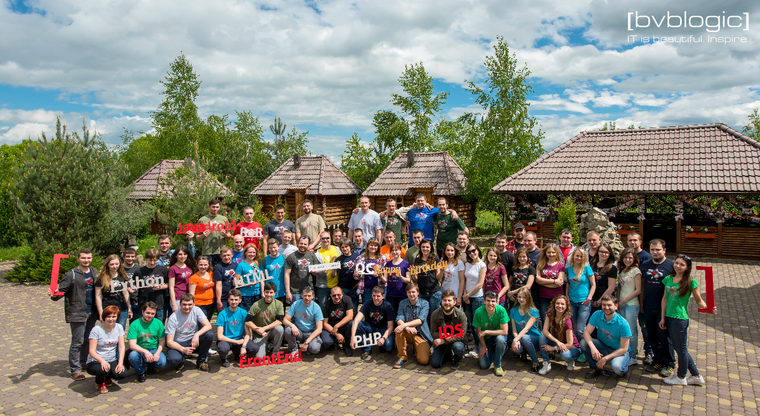
Scalability: We grew several times over without bloating the administrative staff. The system allowed us to manage tasks and hundreds of people across several branches as clearly as a small team.
Work Quality: Our own tools made processes transparent. The team spent less time on bureaucracy, dedicating more time to creativity and code.
Entrepreneur’s Conclusions
The experience at bvblogic showed that the success of a technology company depends not only on successful sales, marketing, and code quality but also on the ability to react in time to internal business challenges.
In the hands of a leader who understands strategy, technology turns into a lever for scaling. We weren't just setting up servers; we were building a foundation capable of withstanding the pressure of rapid growth. It was this systemic readiness that allowed us to confidently take on challenges from the most demanding clients.